
Jon Postel
The man who ran IANA for 30 years. Editor of over 2,500 RFCs and author of the core internet protocols.
Contents
Who is Jon Postel?
Jonathan Bruce Postel was the quiet bureaucrat who held the early internet together. For nearly three decades, he single-handedly managed the most critical administrative functions of the network: assigning protocol numbers, managing the root DNS zone, allocating IP address blocks, and editing the RFC document series. He did this from a small office at USC's Information Sciences Institute, with no formal authority beyond the fact that everyone trusted him to do it right.
He ran IANA (the Internet Assigned Numbers Authority) before it even had that name, handling tasks that today require hundreds of employees at ICANN. When people in the early internet community had a question about how something should work, the answer was usually “ask Postel” or “check the RFC.” More often than not, Postel had written that RFC himself. He authored or co-authored over 200 of them.
Early Life and Education
Postel was born on August 6, 1943, in Altadena, California. He grew up in the San Fernando Valley and attended UCLA, where he earned his B.S. (1966) and M.S. (1968) in Engineering, followed by a Ph.D. in Computer Science in 1974.
At UCLA, he was part of the team that connected the first node of ARPANET in 1969. He was in the room when the first message was sent from UCLA to Stanford. He was also there when it crashed after two letters. But unlike Vint Cerf, who went on to design protocols, Postel took on the less glamorous but equally important job of keeping track of everything.
Postel's Law
Postel is responsible for one of the most quoted principles in software engineering, known as the Robustness Principle or Postel's Law. He wrote it in RFC 760 (1980):
“Be conservative in what you send, be liberal in what you accept.”
The idea is simple: when your software sends data, follow the specification strictly. When it receives data, be tolerant of minor errors and deviations. This principle guided the design of TCP/IP and influenced decades of internet protocol development. It is the reason the internet is as resilient as it is: systems are forgiving of imperfect input rather than crashing at the first irregularity.
Running IANA
From the early 1970s until his death in 1998, Postel was the IANA. Not “he ran IANA.” He WAS IANA. The Internet Assigned Numbers Authority was essentially Jon Postel sitting at his desk, keeping spreadsheets, answering emails, and making decisions about number assignments.
His responsibilities included:
- Assigning protocol parameter numbers (port numbers, protocol identifiers)
- Coordinating IP address allocation to the regional registries (ARIN, RIPE, APNIC)
- Managing the DNS root zone (deciding which nameservers are authoritative for top-level domains)
- Editing and publishing the RFC (Request for Comments) document series
He handled all of this with a small team at ISI. There was no corporate structure, no board of directors, no multi-million dollar budget. There was Postel, a few colleagues, and a handshake agreement with the US government that he would keep things running.
The RFC Editor
The Request for Comments series is the documentation of the internet. Every protocol, every standard, every specification is published as an RFC. Postel was the editor of this series from its inception in 1969 (RFC 1, written by Steve Crocker) until his death. He personally reviewed, formatted, and numbered over 2,500 RFCs.
He also wrote many of the most important ones himself:
- RFC 791: Internet Protocol (IP)
- RFC 792: Internet Control Message Protocol (ICMP)
- RFC 793: Transmission Control Protocol (TCP)
- RFC 821: Simple Mail Transfer Protocol (SMTP)
That list alone accounts for the core of how the internet works.
The Root DNS Test of 1998
In January 1998, Postel did something that revealed just how much power he held. He sent an email to the operators of eight of the twelve DNS root servers, asking them to change their configuration to point to a test root server at ISI instead of the official one operated by the US government.
They did it. Eight out of twelve root server operators followed his request, no questions asked, because it came from Jon Postel.
The US government was not amused. The test lasted about a week before Postel reversed it. He said it was a technical test to prove that the root could be managed independently. The government saw it as a reminder that one man had far too much control over critical internet infrastructure. This incident accelerated the creation of ICANN, which was designed to formalize and distribute the functions Postel had been performing alone.
Death and Legacy
Jon Postel died on October 16, 1998, at the age of 55, from complications following heart surgery. He did not live to see ICANN formally take over IANA functions. The internet lost one of its most important and least visible architects.
Vint Cerf wrote RFC 2468 as a memorial: “I Remembered IANA.” Danny Cohen, a close colleague, wrote: “In the search for truth he was relentless. In the service of the internet community, he was tireless.”
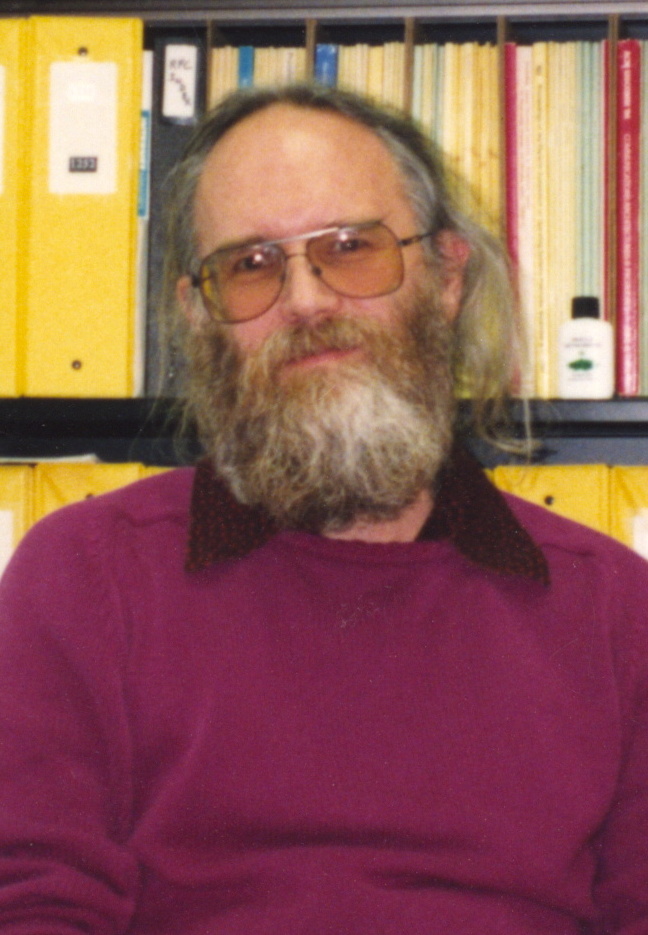
Postel was not famous in the way that Cerf or Berners-Lee are famous. He did not give TED talks or appear on magazine covers. He wore sandals and had a big beard and worked in a small office and quietly kept the internet running for 30 years. The systems he managed, the numbers he assigned, the documents he edited form the administrative backbone of every network connection on Earth.
The postel.org domain, now maintained by his colleagues, simply reads: “He was our North Star.”
Notable Awards
| Year | Award |
|---|---|
| 1998 | Jonathan B. Postel Service Award (named after him, posthumously awarded first) |
| 2012 | Inducted into Internet Hall of Fame (Pioneer category) |
| 2001 | Postel Center at ISI dedicated in his honor |
References
- Jon Postel, Wikipedia
- RFC 2468: I Remember IANA (Vint Cerf, 1998)
- RFC 791, 792, 793, 821 (authored by Postel)
- Internet Hall of Fame, Jon Postel
Sources
Information compiled from Wikipedia, IETF RFC archives, Internet Hall of Fame, USC/ISI records, and personal accounts from colleagues up to 2026.